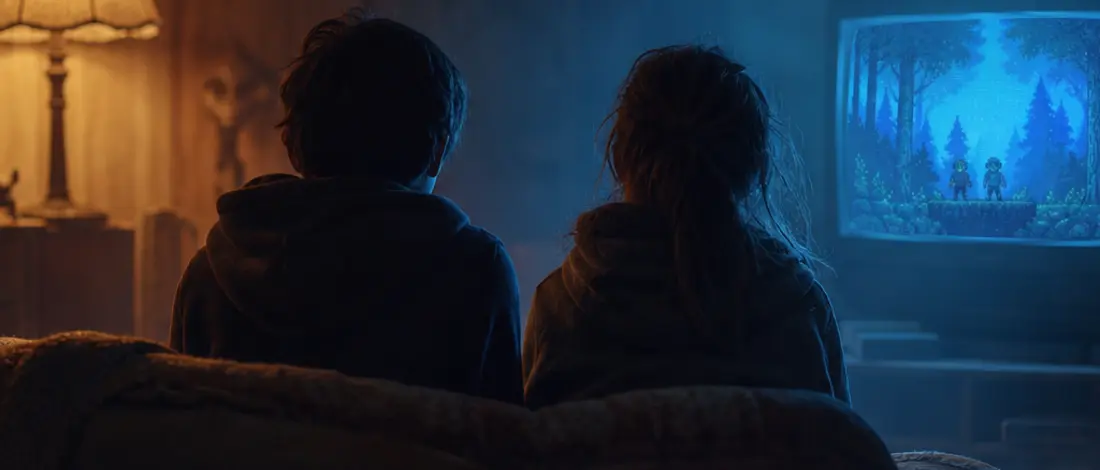
For a lot of kids, talking to other people does not feel as easy as it used to. School, schedules, screens, and general social stress can leave them with fewer relaxed chances to work things out together in real time. That is one reason co op games matter more than many adults realize. When a game gives two players a shared goal, especially in survival or spooky side-scrolling play, conversation stops feeling like a test and starts feeling useful. Instead of “say something,” the moment becomes “watch out,” “take this,” or “follow me,” and connection grows from there.
Why co op games matter for kids who are struggling to connect
Many young players have plenty of ways to be around people, but fewer easy ways to truly collaborate. Casual conversation can feel awkward, and formal activities do not always leave room for natural back-and-forth. Co op games help because they replace social pressure with shared purpose. When two players need to reach the exit, manage supplies, or survive a dangerous level together, communication has a clear reason to happen.
That structure is especially helpful for kids who are shy, easily frustrated, or still learning how to read other people. A game gives them a problem to solve side by side, so they can talk without feeling like talking is the main event. In survival and horror play, that effect gets even stronger: every warning, plan, and rescue matters. The result is a low-pressure space where connection feels active, practical, and often fun.
How 2D survival and horror games make teamwork easier to learn
Two-dimensional and side-scrolling games often do something brilliantly simple: they make the situation readable. Players can usually see the threat, the route forward, and each other without wrestling with a complicated camera. For younger kids, that matters. Instead of getting lost in 3D space, they can focus on timing a jump, opening a door, distracting an enemy, or deciding who carries the last health item.
That clarity makes teamwork easier to teach. In many 2D survival experiences, roles emerge naturally. One player hangs back to revive, one moves ahead to scout, one saves a tool for emergencies. Because the layout is easier to understand at a glance, the communication becomes about choices rather than confusion. Kids practice saying what they see, what they need, and what they plan to do next.
Survival mechanics reinforce this beautifully. Shared resources, limited safe spaces, and escape routes all reward players for speaking up and paying attention. “I found food.” “Save your light.” “Wait until I get there.” Those are small lines, but they build real habits: observing, informing, and cooperating under pressure.
What kids actually practice when they play together
Good co-op play is never just button pressing. Beneath the surface, kids are rehearsing a surprising number of social skills. They listen for instructions, negotiate turns, make quick decisions, and recover from mistakes together. Even when the conversation is brief, the exchange teaches rhythm: speak, respond, adjust, try again.
- Listening closely when another player spots danger or suggests a plan
- Turn-taking when only one person can use a tool, weapon, or safe route first
- Problem-solving when a puzzle, chase, or resource shortage changes the plan
- Patience after failure, especially when a teammate makes a costly mistake
- Encouragement that keeps the group steady instead of blaming each other
Failure is one of the most valuable parts. In a healthy co-op session, a lost run becomes a safe lesson in accountability: who rushed, who forgot, who can help next time. That is much easier to absorb in a game than in a lecture. It also gives quieter kids a chance to contribute through action. A child who does not talk much may still be the one who protects the group, remembers the pattern, or nails the escape timing. Being useful is often the first step toward feeling confident enough to speak.
Why co op horror games can turn fear into trust and cooperation
Fear changes the way players communicate. In solo horror, tension often pushes a person inward. In co op horror games, that same tension can pull players together. When something scary is coming, kids naturally call out enemy movement, ask each other to wait, and stay close. The shared scare creates urgency, but because they are facing it together, that urgency becomes cooperation rather than isolation.
That is what makes age-appropriate co op horror games different from horror that simply overwhelms. The best co-op scary experiences reward sticking together, sharing information, and rescuing one another. A locked gate, a dark tunnel, or a sudden chase becomes memorable not just because it is frightening, but because someone said, “I’ve got you,” and meant it in gameplay terms.
For siblings, friends, and parents playing with kids, those moments can become lasting bonding stories. Surviving the tense part together is satisfying in a way that feels bigger than the level itself. Shared fear, handled well, often becomes shared trust.
What the best couch co op games do better than online-only play
Online play can absolutely help kids connect, especially with faraway friends. But the best couch co op games offer something harder to replace: the same room. When players sit together, they pick up body language, hear tone instantly, and react at the same moment. A laugh after a bad fall or a quick glance before a risky move can smooth over misunderstandings before they grow.
That is especially useful for younger players who are still learning how to collaborate. Parents can coach without hovering. Older siblings can model calm communication in the middle of a messy fight for survival. Friends can feel when someone is getting overwhelmed and reset the mood faster than they might through voice chat alone. In that shared physical space, teamwork feels more personal and usually more forgiving.
This is why so many of the best couch co op games leave such a strong impression. They are not just fun systems; they are social spaces where players read one another more fully. For kids, that can make the difference between simply playing together and genuinely connecting.
Examples of 2D co-op survival and horror play that encourage real communication
The strongest examples are usually built around moments that demand timely, simple communication. One player holds a switch while the other moves through a danger zone. Someone spots a trap and warns the group. A limited item has to go to the teammate in the most trouble. An escape works only if both players move in rhythm. These are small interactions, but they create a constant cycle of noticing, calling out, and responding.
That is where 2D and side-scrolling design shines. Because positions are easy to track, every movement has social meaning. If one player pushes forward too early, the other feels it immediately. If someone waits, covers a route, or saves a revive, that support is obvious. In many co op horror games with a 2D feel, the tension comes from exactly this kind of interdependence: no one succeeds cleanly by ignoring the other person.
Parents looking for value should pay attention to that design more than to labels alone. The best experience is not just “multiplayer.” It is a game where the path forward keeps giving players reasons to talk, share, and adapt together.
How to choose the right co-op game for younger players
Not every cooperative game fits every child, especially when survival and horror themes are involved. The best choice depends on scare level, complexity, and session length. Some kids love a little tension but freeze when chased. Others can handle spooky visuals just fine but get frustrated by punishing systems. A good rule is to match the game to the child’s temperament, not just their age.
Look for clear objectives, forgiving checkpoints, and mechanics that reward helping instead of competing for attention. Games that allow revives, shared problem-solving, and visible goals tend to work well. If you are browsing for the best couch co op games for a family setup, simpler local titles with readable action usually create better early experiences than dense games with too many overlapping systems.
It also helps when adults co-play. That allows you to set boundaries around content, pause when needed, and talk afterward about what happened in the game. “How did we solve that?” or “What should we do next time?” turns a play session into reflection without making it feel like homework.
The bigger takeaway: cooperative play can become social practice
It is easy to dismiss games as escape, but that misses what cooperative play can do for young people right now. In a moment when conversation often feels fragmented or strained, co-op survival and horror games can offer a structured, low-stakes way to build trust. The goals are clear, the feedback is immediate, and the need for teamwork is real enough to matter.
That is especially true in 2D design, where the action is readable and communication has room to breathe. Kids can learn to warn, wait, share, and recover together without the extra friction of confusing space or overly complex controls. Whether they are playing side by side on the couch or with a helpful older sibling guiding the way, they are practicing connection through doing.
In the end, that may be the most important thing these games provide. Not just entertainment, not just challenge, but a meaningful way to say, “We can figure this out together.”