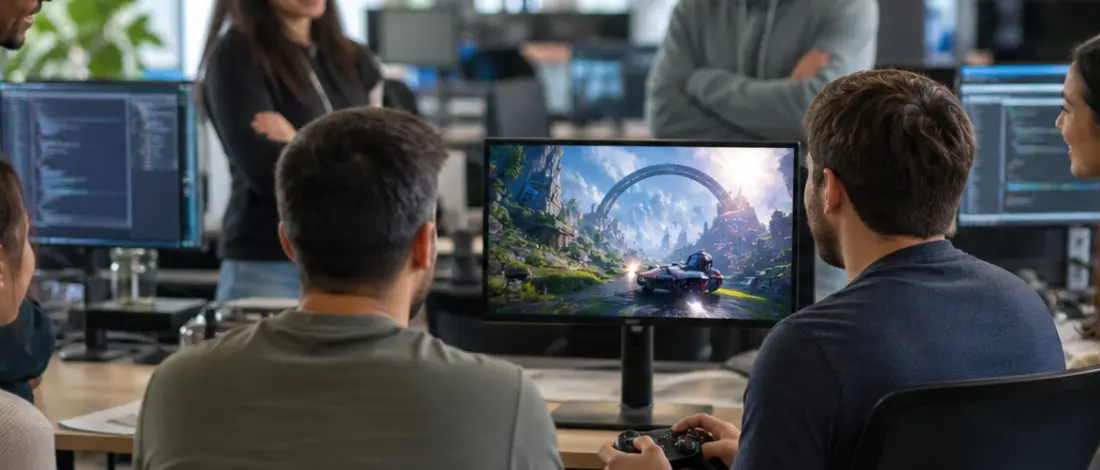
In busy IT environments, even a short reset can make a measurable difference. Used intentionally, co op games can give developers, support teams, and infrastructure specialists a fast mental break that is more refreshing than checking social feeds or drifting into random distractions. The goal is not to replace productive time, but to create a healthier rhythm where brief play helps people return to work with better focus, steadier energy, and a more sustainable sense of balance.
Why co op games can be a smart micro-break for IT teams
IT work demands prolonged concentration. Writing code, troubleshooting incidents, reviewing logs, and moving through ticket queues all place a heavy load on attention. After long stretches of problem-solving, people often do not need a long escape; they need a clean mental reset. That is where co op games can help. A short, structured break gives the brain a different kind of task, reducing fatigue without pulling people too far away from their workday.
A 10 to 15 minute session is often enough to interrupt mental overload while still fitting naturally into a professional schedule. Compared with passive scrolling, short team play is active, social, and time-boxed. Many of the best coop games are effective in this format because they offer clear objectives and quick rounds, which makes stopping easy and returning to work feel natural rather than abrupt.
When employees step back from a stubborn bug or a repetitive support task, they often come back with improved concentration. That is one reason organizations increasingly look at fun multiplayer games as a practical tool for work balance. Used in moderation, these micro-breaks can improve morale while helping people re-engage with difficult tasks more efficiently.
What makes team play better than passive distractions
Passive distractions can leave people oddly drained. A few minutes of scrolling messages, jumping between tabs, or watching unrelated clips may feel like a break, but it often creates more cognitive clutter. Team play works differently. Because it has a beginning, a shared objective, and a clear end, it feels purposeful even when it is lighthearted. That is why fun multiplayer games tend to refresh people more effectively than unstructured digital downtime.
There is also a social benefit. Shared goals, quick callouts, and small moments of problem-solving strengthen team connection in ways solo distractions cannot. Even lightweight coordination builds habits that carry back into work: concise communication, trust, and awareness of how others approach problems. Many of the best coop games create this effect without demanding deep commitment, making them a smart fit for technical teams that need a reliable reset.
For remote and hybrid teams, the value is even higher. Casual hallway interaction is limited when people are distributed, so short sessions of fun multiplayer games can recreate some of that missing social glue. A scheduled team break gives people a reason to connect that is low-pressure, inclusive, and separate from meetings, which can improve cohesion without adding another formal calendar block.
What separates the best coop games from a workplace time sink
Not every game belongs in a work setting. The best coop games for workplace breaks share a few practical traits: they are easy to learn, easy to launch, and easy to stop. People should be able to join quickly without tutorials, account setup headaches, or a long warm-up. Just as important, the session should end cleanly so nobody feels pulled into “one more round” when it is time to get back to work.
Low friction matters. Browser-based options or games that run well on common devices are ideal because they remove barriers to participation. Teams should not need large downloads, high-end hardware, or complicated installs just to enjoy 10 minutes together. In practice, many co op games fail as a work break because they are built for long sessions. The best coop games in this context are short-session friendly and let people re-enter after missing a day or two without feeling lost.
Culture fit matters as much as mechanics. Workplace game breaks should avoid toxic interactions, steep skill gaps, and unclear stopping points. Simpler systems, quick objectives, and cooperative play usually work better than highly competitive formats. The right choice supports energy and connection; the wrong one becomes a time sink. That is why teams looking for fun multiplayer games should prioritize clarity, accessibility, and respectful play over complexity.
Why co-op survival loops help people return to hard problems
Co-op survival gameplay is especially effective as a micro-break because it creates a focused challenge with a short horizon. Players gather resources, react to changing conditions, and make quick decisions together. That temporary shift in attention clears space in the mind. Instead of endlessly rehearsing the same bug, outage, or design issue, people engage with a contained task and then return with a fresher perspective.
Interestingly, these loops mirror useful workplace skills without carrying real project pressure. Planning, prioritizing, adapting, and communicating under light constraints all feel familiar to IT professionals, but the stakes are lower and the mood is lighter. That makes survival-style sessions some of the best coop games for teams that want a break which still feels active and collaborative rather than passive.
A good example is coopsurvive.com, which offers a quick, cooperative experience that is easy to pick up during the workday. For teams exploring co op games as healthy micro-breaks, this kind of format works well because it delivers a short distraction that still feels purposeful. It is one of those fun multiplayer games that can reset attention without demanding a large block of time.
How to make fun multiplayer games a healthy work habit
The key to success is intentional use. Teams should choose fixed break windows, such as after standup, before lunch, or during a mid-afternoon energy dip. A predictable schedule keeps fun multiplayer games in the category of planned recovery rather than spontaneous procrastination. It also makes participation easier because people know when a session starts and when it ends.
Participation should always be voluntary. Not everyone enjoys games, and a healthy team culture respects that. Some employees may prefer a walk, coffee break, or quiet reset. The goal is to provide an option that supports work balance, not to create a new expectation. The best coop games help culture when they are inclusive, lightweight, and clearly framed as one possible break activity among several.
Boundaries matter too. No team should be gaming during a production incident, a critical deadline, or a customer-facing escalation. Short sessions of co op games work best when they sit outside urgent responsibilities and never interfere with service quality. With clear boundaries, the habit stays healthy and professional.
A simple pilot plan for introducing game breaks at work
Start small. One or two sessions per week with a single team is enough to test whether the idea fits your culture. A pilot makes it easier to gather honest feedback and adjust timing before expanding. If the initial response is positive, teams can continue using fun multiplayer games as an optional break format without forcing a large rollout.
Choose a game that is cooperative, quick to learn, and easy to end on time. The best coop games for a pilot are the ones people can understand in minutes and revisit without a long reorientation period. Browser-first experiences are especially practical because they reduce setup friction and make joining simpler across managed devices.
It also helps to assign a lightweight owner. This person can schedule the break, keep it brief, and make sure sessions stay aligned with team goals. They do not need to run a program; they just need to protect the boundaries that keep co op games useful rather than disruptive.
How to tell whether game breaks are actually helping
Teams do not need a complicated measurement framework to see whether these breaks are working. Start with informal signals: mood after the session, energy during the next work block, quality of collaboration, and how quickly people re-engage with hard tasks. If a short break leaves people sharper and more connected, that is a strong sign the practice is adding value.
Simple pulse surveys or team retrospectives can add useful context. Ask whether the sessions feel refreshing, distracting, or neutral. Find out whether people prefer different times, shorter windows, or different styles of fun multiplayer games. Over time, this feedback helps teams identify the best coop games for their specific workflow and culture.
The balanced takeaway is straightforward: when managed well, co op games can support productivity, morale, and healthier work balance. They are not a cure-all, and they should never replace solid workload management. But as a deliberate micro-break, the right game can help IT teams reset faster, collaborate better, and return to work with renewed focus.