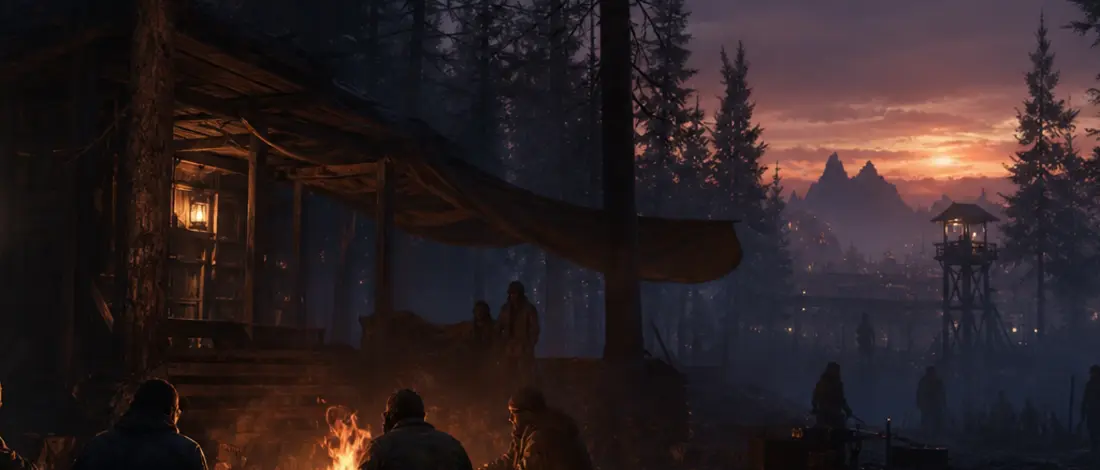
The best multiplayer memories are rarely the cleanest victories. They are the disasters that somehow turned into miracles, the supply runs that went wrong in exactly the right way, the panicked sprint back to camp at dusk while one friend shouts bad directions and another heroically pretends everything is under control. That is why co op survival games keep producing stories players retell for years. They do not just give groups objectives to complete; they give them situations to survive together, and that difference turns routine play into something far more personal, messy, and unforgettable.
Why Co Op Survival Games Turn Every Session Into a Story Worth Retelling
Most multiplayer genres are built to generate results. You remember the rank-up, the clutch round, the heartbreaking loss, the loot drop. Those moments matter, but they often flatten into the same basic shapes over time: win, lose, queue again. Co op survival games, by contrast, are memorable because they create sequences. A storm arrives at the wrong moment, somebody forgets medicine, night falls before the shelter is finished, and suddenly the whole session has a beginning, middle, and chaotic ending.
That is the genre’s secret strength. Survival mechanics make ordinary teamwork feel like narrative because every decision carries risk, ownership, and consequence. If a friend saves you with their last bandage, that is not just efficient play; it feels like character. If the group debates whether to explore one more cave before sunrise, that is not just route planning; it is tension. The story is not delivered to the players. The players make it together, minute by minute, often without realizing it until they are laughing about it later.
What Makes Emergent Narrative So Powerful in Survival Games
Emergent narrative is a simple idea with a powerful effect: stories that arise from systems colliding with player choices instead of being handed over by cutscenes. In accessible terms, it is the difference between being told that a world is dangerous and discovering that danger because your torch dies halfway through a storm while your map-reader gets lost. The plot is not prewritten. It emerges from mechanics, timing, mistakes, luck, and improvisation.
That is why survival games are such fertile ground for it. Hunger, weather, crafting, exploration, injury, darkness, hostile creatures, and limited inventory space are always pressing against each other. Even a basic decision like splitting up for supplies can spin into a perfect story beat: one player misreads a threat, another takes a shortcut that becomes a disaster, and a simple scavenging run turns into a rescue mission. The genre constantly creates opportunities for escalation, which means even quiet sessions can suddenly become dramatic without any script needing to intervene.
Shared Stakes Make Cooperation Feel More Human Than in Most Multiplayer Genres
Compared with PvP shooters, MOBAs, or progression-heavy online worlds, co-op survival often feels less compartmentalized and more intimate. The goals are not always as clean as “capture the point” or “win the lane,” and the timeline is rarely as neat as a 20-minute match. In survival games, staying alive is the objective that sits underneath every other objective, so the entire group remains tied to the same fragile thread.
That shared vulnerability changes the emotional temperature. When one player revives a teammate under pressure, gives away their last food item, or stays behind to protect camp while everyone else escapes, the action lands harder because the stakes feel communal. Success belongs to the group in a way many multiplayer formats only approximate. You are not just combining abilities efficiently; you are depending on each other in a world that is specifically designed to punish complacency, selfishness, and bad timing.
Scarcity, Risk, and Trust Are the Real Story Engines
The real drama in great survival games comes from shortage. Limited food, ammo, medicine, shelter, and daylight force decisions that are actually interesting because they cannot all be optimized away. Who gets the warm gear? Do you spend rare materials on defenses or tools? Is it smarter to push farther for better loot or turn back before dark? When resources are thin, every choice leaves a mark, and the group can feel that weight immediately.
Just as importantly, pressure exposes personality. Even among friends, trust is never a static thing. Somebody forgot supplies. Somebody wandered off chasing a hunch. Somebody panicked and used the emergency stash. Those are tiny social fractures, but they are also the raw material of great multiplayer storytelling. One bad call can become a running joke for months, and one selfless play can turn a usually quiet squadmate into the hero of the evening. In that sense, survival games are not only about fighting the environment; they are about watching a group reveal itself under stress.
Base-Building Turns Progress Into a Shared Memory Palace
One of the smartest tricks in the genre is that progress often becomes physical. A base is not just a utility hub; it is a record of what the group has been through. The reinforced wall remembers the raid that nearly wiped everyone out. The extra storage room remembers the week when nobody could stop hoarding supplies. The watchtower remembers the night the camp was caught blind. Few multiplayer systems preserve memory as elegantly as a home that visibly changes because of collective hardship.
That makes base-building far more resonant than a scoreboard or match history. In wilderness survival, a humble shelter can feel like a monument because every plank represents a narrow escape from exposure and hunger. In crafting-heavy base survival, sprawling compounds tell the same story at a larger scale: this is what our priorities were, this is where we got smarter, this is where we overprepared after one terrifying mistake. Different formats across survival games arrive at the same emotional effect. They give a group a place where its history can live.
Why Co Op Horror Games Intensify Every Multiplayer Story Beat
Co op horror games take all of those strengths and tighten the screws. Fear amplifies every survival mechanic because uncertainty becomes part of the challenge, not just the atmosphere. Darkness limits confidence, sound design makes empty spaces feel threatening, and incomplete information turns simple navigation into a risk assessment. The result is that ordinary tasks suddenly pulse with dread: opening a door, checking a basement, crossing a forest path after sunset.
That extra tension is why the genre produces so many stories that swing wildly between panic and comedy. A whispered plan falls apart when somebody screams at the wrong noise. A careful formation dissolves because no one noticed a teammate quietly vanish behind the group. Communication becomes performance, and teamwork becomes drama in real time. The best co op horror games understand that fear is not only about monsters; it is about how players behave around each other when nobody feels fully safe, fully informed, or fully brave.
The Best Multiplayer Stories Come From Systems That Let Players Author the Drama
This is the real argument in favor of the genre: co op survival games are better at generating memorable multiplayer stories than many competitive or progression-focused games because they fuse mechanics, emotion, and group dynamics all at once. Emergent narrative gives the session shape. Shared stakes give actions emotional weight. Scarcity and trust create conflict without needing villains. Base-building preserves history. And when co op horror games enter the picture, fear sharpens every decision until even small moments feel cinematic.
Players may log in for challenge, progression, or the satisfaction of a well-run expedition, but that is not usually what they talk about a month later. What lasts is the story only their group could have made: the rescue that should have failed, the camp that somehow held, the expedition ruined by one reckless choice and saved by one ridiculous act of courage. That is why survival games keep earning a special place in multiplayer culture. They do not just ask people to play together. They let them author the drama together.